Life-giving rains recover Shadegan wetland
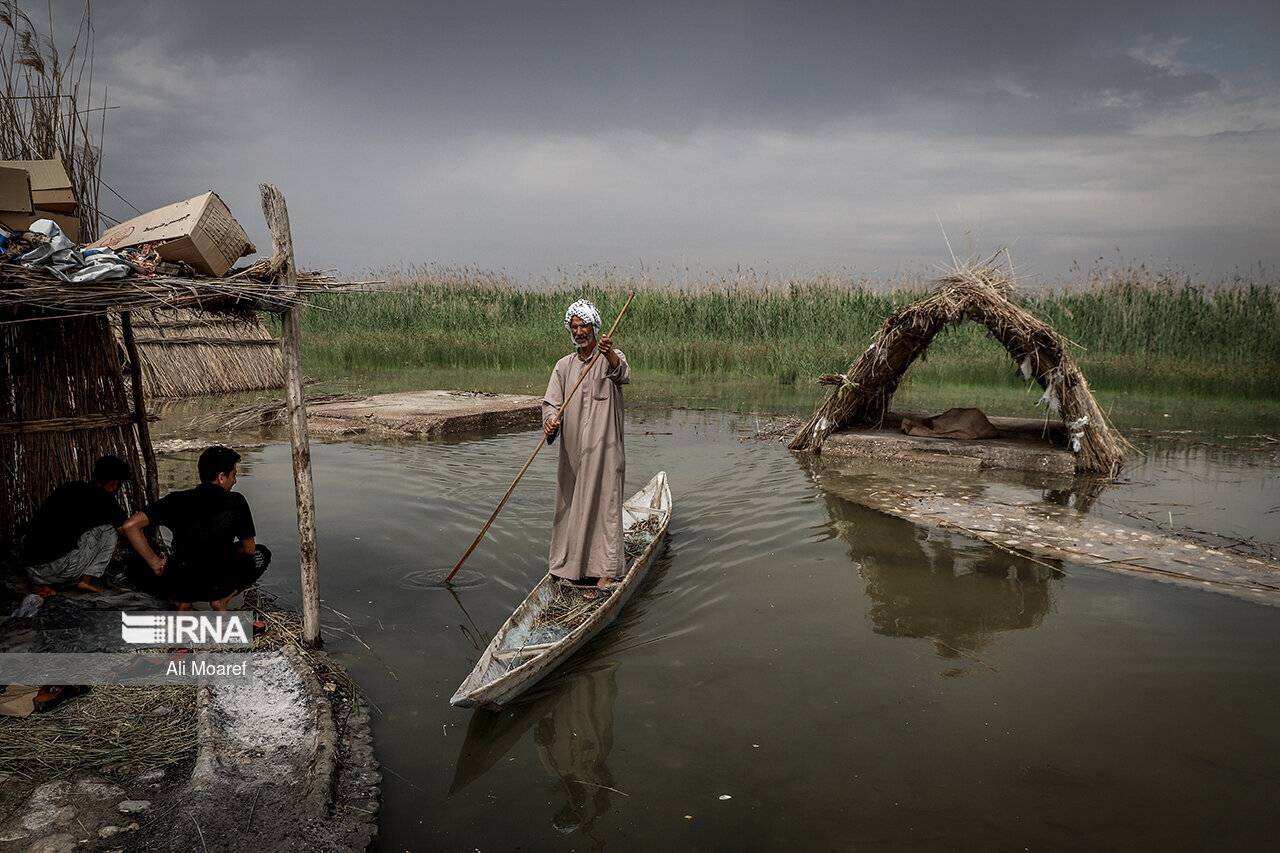
TEHRAN – The recent increase in precipitation in southwestern Khuzestan province has restored 92 percent of the Shadegan wetland, which is thriving as an ecosystem benefiting flora and fauna, as well as local communities.
Shadegan wetland covers an area of over 500,000 hectares. Registered as one of the largest wetlands in the Ramsar Convention, Shadegan is a wetland of national and international importance due to its vast area and rich biodiversity, IRNA quoted Mosa Modhaji, the head of the provincial department of environment, as saying.
The wetland is one of the most valuable wetlands of the country, which plays an integral role in the ecological sustainability of the region, he noted.
Over the past few years, the wetland faced severe water shortage because of heavy water withdrawal and reduced river flows. Water level dropped sharply in some parts, posing serious threats to the wetland’s vegetation and animal species.
However, recent rainfall in the province and the upstream watersheds has noticeably improved Shadegan wetland’s condition, filled it with water, and revived it, making people and environmentalists hopeful about the wetland’s future.
The wetland’s revival has also brought great joy to the local community whose livelihoods have long depended on fishing, reed harvesting, livestock farming, and tourism. Some 100,000 people rely on the wetland for their livelihood.
Currently, the water level of the wetland is close to its optimal level. The natural flow of water has contributed to the restoration of some habitats in the central and southern parts of the wetland.
The Ramsar Convention on Wetlands was signed in the city of Ramsar, Iran, in 1971. This intergovernmental treaty provides the framework for international cooperation on wetland conservation. The convention officially came into force in 1975. Since then, many countries have become Contracting Parties to the convention.
The conservation and sustainable management of wetlands and their associated aquatic and terrestrial ecosystems, the protection of migratory birds and wetland-dependent species, international cooperation on the exchange of knowledge and joint management of wetlands, especially transboundary wetlands, are among the main objectives of the Ramsar Convention.
In Iran, 141 wetlands with ecological value, with an area of over 3 million hectares, have been identified, 27 of which were listed in the Ramsar Convention.
Water management needed
Although the increase in precipitation has increased hope to secure water rights for wetlands, it does not obviate the need for water management, the head of the Department of Environment has said.
Without sustainable management of water resources and consumption patterns, the temporary rise in water supply cannot prevent environmental crises, IRNA quoted Shina Ansari as saying.
Iran is an arid and semi-arid country that is always affected by climate change. Heavy rainfall this spring should not result in discarding the implementation of water management plans, Ansari noted.
To handle climate change impacts mid-term and long-term plans to reduce water consumption in agriculture and industry sectors, as well as manage water consumption, water recycling, and wastewater treatment systems, should be put on the agenda, she added.
Moreover, current rainfalls increase greenery and vegetation growth, which in turn enhances the possible frequency of fires in summer. Therefore, it is essential to be ready for any difficult situations in the future, the official highlighted.
Precipitation in the first month of the spring contributed to compensating for the lack of rainfall; currently, the recorded average rainfall is seven percent above the normal figure, the head of the Meteorological Organization has said.
Rainfall in spring significantly increased. Compared to the last year, the amount of rainfall doubled in most areas located in the northwest and west of the country, IRIB quoted Ahad Vazifeh as saying.
“Overall, the country has received 13 mm more rain in comparison to the long-term period of 30 years, the distribution of precipitation has been unequal, though,” Vazifeh noted.
Despite light snowfall in winter, low temperatures along with abundant rainfall increased the amount of snow in Alborz and Zagros heights, as well as the amount of water saved in dams.
Precipitation in the last month of winter and the first two weeks of spring was unprecedented in some provinces; in Ilam province, the received rainfall was the highest amount recorded over the past 76 years. The rainfall has been above normal in South Khorasan, Kerman, Hormozgan, south of Fars, and Bushehr provinces, he added.
In Tehran province, the lack of rainfall has dropped from -55 percent to -35 percent.
Rainfall is forecast to restart in the second month of the spring, particularly in the western half of the country.
MT/MG
Leave a Comment